


 Beautiful, Cost-Effective Kitchen Remodels for Southcentral Alaska
How to Create a Modern Kitchen Layout That Fits Your Family’s Lifestyle
May 18, 2026The modern kitchen has evolved far beyond a space used only for cooking. Today, it functions as a gathering area, workspace, homework station, entertainment hub, and everyday meeting point for families. Because of this shift, homeowners are moving away from rigid kitchen planning rules and toward layouts designed around real-life routines, habits, and relationships. Industry experts increasingly emphasize flexible “kitchen zoning” instead of relying entirely on the traditional kitchen work triangle.
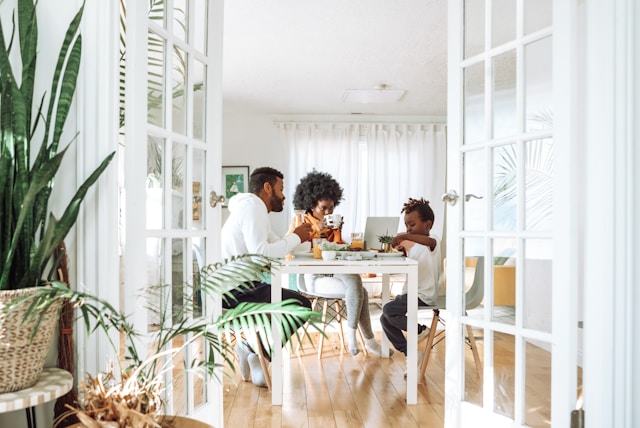
Creating a kitchen layout that truly fits your family’s lifestyle requires more than choosing stylish cabinetry or trendy finishes. It involves understanding how your household uses the space every day and designing around those behaviors. From open-concept kitchens to multifunctional islands and dedicated prep zones, modern layouts prioritize comfort, functionality, and adaptability.
Understanding How Your Family Uses the Kitchen
Before selecting a layout, homeowners should evaluate how their family interacts with the kitchen throughout the day. A household with young children has different needs than one focused on entertaining guests or supporting multiple cooks.
Modern kitchen design increasingly revolves around lifestyle-based planning. Designers now organize kitchens into zones for cooking, prep, cleanup, storage, dining, and socializing instead of depending solely on the classic triangle layout connecting the sink, stove, and refrigerator.
Questions homeowners should ask include:
- Does the family eat together daily?
- Are children doing homework in the kitchen?
- Is entertaining frequent?
- Do multiple people cook simultaneously?
- Is additional storage needed for bulk shopping or appliances?
- Does anyone work remotely from the kitchen space?
These lifestyle considerations influence everything from island size to seating placement and appliance positioning.
Why Kitchen Zoning Matters in Modern Homes
Kitchen zoning has become one of the most influential design concepts in contemporary homes. Instead of treating the kitchen as a single workspace, zoning divides the area into functional sections tailored to specific activities.
Design experts note that modern households use kitchens for far more than meal preparation. Zoning allows several people to use the space comfortably without disrupting workflow.
Common kitchen zones include:
| Kitchen Zone | Purpose |
|---|---|
| Prep Zone | Chopping, mixing, meal preparation |
| Cooking Zone | Stove, ovens, cooking utensils |
| Cleaning Zone | Sink, dishwasher, waste disposal |
| Storage Zone | Pantry, cabinets, refrigerator |
| Beverage Zone | Coffee station, wine storage, drinks |
| Social Zone | Island seating, breakfast nook, dining area |
| Homework/Work Zone | Charging stations, laptops, paperwork |
This layout strategy reduces congestion while improving organization and efficiency.
Choosing the Right Kitchen Layout
Different kitchen layouts serve different family dynamics and room sizes. Selecting the right one depends on available square footage, traffic flow, and household routines.
L-Shaped Kitchens
The L-shaped kitchen remains one of the most versatile modern layouts. Using two adjoining walls, this design creates an open center space that supports islands, dining tables, or additional seating.
Experts often recommend L-shaped kitchens for families because they balance openness and efficiency.
Benefits include:
- Better traffic flow
- Flexible seating options
- Easy integration with open-concept living
- Efficient use of corner space
- Suitable for small and medium-sized homes
This layout works especially well for households wanting visibility into adjacent living spaces while cooking.
U-Shaped Kitchens
U-shaped kitchens surround users on three sides, maximizing storage and countertop space. Families who cook frequently or need significant storage often prefer this arrangement.
The U-shape naturally supports the traditional work triangle while allowing modern zoning concepts.
Advantages include:
- Extensive counter space
- Excellent storage capacity
- Strong workflow efficiency
- Reduced traffic interference
- Clear separation between cooking and social zones
However, this layout generally requires a larger footprint to avoid feeling cramped.
Galley Kitchens
Galley kitchens feature two parallel runs of cabinetry and appliances. Though compact, they can be highly functional when carefully planned.
Modern galley kitchens now incorporate improved lighting, streamlined storage, and open shelving to prevent a narrow appearance.
Galley kitchens are ideal for:
- Smaller homes
- Apartments
- Narrow floorplans
- Families prioritizing efficiency over entertaining
Island-Centered Kitchens
Kitchen islands have become central to modern family living. Rather than functioning solely as prep surfaces, islands now support dining, homework, socializing, and storage.
Industry reports consistently identify multifunctional islands as a defining feature of contemporary kitchens.
A well-designed island may include:
- Seating
- Sink or prep sink
- Microwave drawers
- Hidden storage
- Charging stations
- Beverage refrigerators
For busy families, the island often becomes the true center of household activity.
Open-Concept vs. Broken-Plan Kitchens
Open-concept kitchens remain highly popular because they encourage interaction and maximize natural light. Families appreciate the ability to cook while supervising children or entertaining guests.
However, design trends are shifting toward “broken-plan” or “micro-zoned” kitchens that preserve openness while introducing subtle separation.
Broken-plan kitchens may use:
- Half walls
- Glass partitions
- Different flooring materials
- Lighting changes
- Ceiling details
- Built-in banquettes
- Cabinet placement
This approach creates visual structure without completely isolating the kitchen.
Families who value both openness and organization often find broken-plan layouts more practical than fully open spaces.
Rethinking the Kitchen Work Triangle
The traditional kitchen work triangle has shaped kitchen design for decades. The principle connects the sink, refrigerator, and stove to minimize movement during cooking.
While the triangle still provides value, experts now consider it only one part of a larger design strategy.
Modern kitchens frequently support:
- Multiple cooks
- Additional appliances
- Larger spaces
- Social interaction
- Entertainment
- Remote work
Because of these changes, designers increasingly prioritize flexible zones over strict triangular movement patterns.
Still, maintaining reasonable proximity between major appliances remains important for efficiency.
Designing for Families With Children
Families with children require layouts focused on safety, supervision, and accessibility.
Key considerations include:
- Clear sightlines to living areas
- Rounded island corners
- Durable countertops
- Easy-clean flooring
- Accessible snack zones
- Hidden electrical outlets
- Adequate seating
Open kitchens often help parents supervise children while preparing meals.
Many modern kitchens also incorporate lower drawers for children’s dishes and designated homework spaces near charging outlets.
Storage Solutions That Improve Daily Function
Storage remains one of the biggest challenges in kitchen planning. Modern layouts emphasize concealed organization to reduce clutter and visual noise.
Popular storage upgrades include:
- Walk-in pantries
- Appliance garages
- Deep drawer systems
- Pull-out spice racks
- Vertical tray storage
- Corner cabinet organizers
- Hidden recycling stations
Recent design trends also highlight open pantry concepts and dedicated appliance zones for improved efficiency.
Thoughtful storage planning helps kitchens remain functional even as family needs evolve.
The Role of Lighting in Kitchen Layout Design
Lighting dramatically affects both functionality and atmosphere. Modern kitchens rely on layered lighting systems rather than a single overhead fixture.
Common lighting layers include:
- Task lighting under cabinets
- Pendant lighting above islands
- Ambient ceiling lighting
- Accent lighting inside cabinets
- Natural daylight integration
Experts note that lighting also helps define zones in open-concept kitchens.
Well-planned lighting improves visibility, mood, and overall usability.
Materials and Finishes for Busy Families
Modern kitchen materials must balance appearance with durability.
Popular family-friendly materials include:
| Feature | Recommended Materials |
|---|---|
| Countertops | Quartz, granite, porcelain |
| Flooring | Luxury vinyl plank, tile, engineered wood |
| Cabinet Finishes | Matte laminate, painted wood, thermofoil |
| Backsplashes | Porcelain tile, slab backsplash |
| Hardware | Fingerprint-resistant finishes |
Large-format surfaces and continuous materials are increasingly used to create visual openness and simplify maintenance.
Durability becomes especially important in kitchens used heavily by children or frequent entertainers.
Technology and Smart Kitchen Integration
Technology now plays a major role in modern kitchen layouts. Smart appliances and integrated charging systems support convenience and efficiency.
Popular smart kitchen features include:
- Voice-controlled lighting
- Smart refrigerators
- Touchless faucets
- Charging drawers
- Wi-Fi-enabled ovens
- Integrated speakers
- Smart ventilation systems
Modern layouts often include hidden charging stations and tech-friendly seating areas to support work, school, and entertainment needs.
Planning for Long-Term Flexibility
The best kitchen layouts evolve with changing family lifestyles. Flexible spaces help homeowners avoid expensive renovations later.
Adaptable design choices include:
- Expandable islands
- Modular storage systems
- Convertible seating
- Multi-purpose workspaces
- Movable furniture
- Universal design principles
Research on inclusive kitchen design also highlights the importance of visibility, uncluttered layouts, and easy navigation for aging homeowners.
A flexible kitchen remains functional through different life stages, from raising children to aging in place.
Creating a Kitchen That Reflects Real Life
Modern kitchen layouts are no longer defined solely by trends or traditional design rules. Today’s most successful kitchens reflect how families truly live, gather, cook, and connect.
Industry experts consistently emphasize the transition from rigid layouts toward flexible zoning, multifunctional islands, and adaptable spaces tailored to daily routines.
Whether choosing an open-concept design, a broken-plan layout, or a highly organized U-shaped kitchen, the goal remains the same: creating a space that balances style, comfort, and practical functionality.